Guides/accounting firms
The January 1099 scramble is decided in September
Sep 11, 2026 · 5 min read
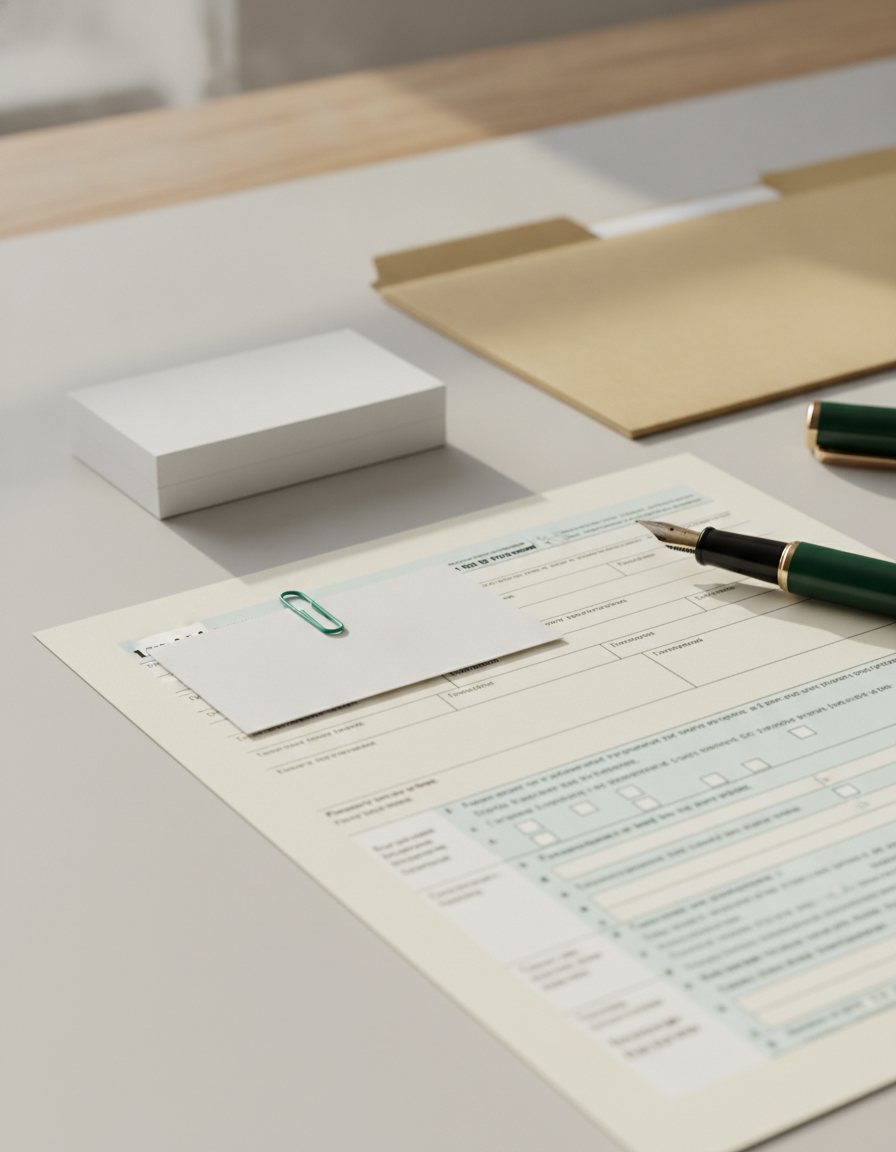
Every firm has the same last two weeks of January. Someone pulls the vendor list, sorts by payments over the threshold, and discovers that a third of them have no W-9 on file. Then the chase starts: emails to vendors who don't answer, clients who "thought you had it," a contractor who moved and whose address on the check stub is wrong. The 1099s go out late, or they go out with a mailing address instead of a TIN, and the firm eats the hours.
We run an accounting firm, and for years that was our January too. Here's what we eventually admitted: the 1099 scramble is not a January problem. It's a vendor-setup problem that January exposes. The vendor who needed a W-9 in March didn't get asked in March, so the firm is asking in January, when the vendor has no reason to answer.
What changed for 2026 payments
Before the mechanics, the rule change that most firms haven't fully absorbed. For payments made in 2026 (the forms that go out in January 2027), the reporting threshold for Forms 1099-NEC and 1099-MISC moved from $600 to $2,000, indexed for inflation after that. That's the One Big Beautiful Bill Act change, and it cuts the number of 1099s most small firms file by a third or more.
Two things it does *not* change: the W-9 is still the document you need for every vendor who could cross the line, because you don't know in March who will cross $2,000 by December, and backup withholding still applies at 24% when a payee won't give you a TIN. And the 1099-K threshold for payment apps went back to $20,000 and 200 transactions, which mostly matters for the vendors you *don't* have to file for: card and app payments to a contractor are reported by the processor, not by your client.
Verify the threshold against the final IRS instructions when they land; the number is statutory, but the indexed amount and the form instructions are the IRS's to publish.
The rule that ends the scramble
One rule, applied at the moment it costs nothing: no W-9, no vendor record, no first payment. When a client adds a vendor, the W-9 is collected before the bill is entered. Not after the first check, not "when we get around to it." Before.
Why it works: in March, the vendor wants to get paid, so the W-9 comes back the same day. In January, the vendor has already been paid and has nothing to gain by answering. The document is free at setup and expensive at year end, and every firm that fights January is paying the expensive price for the same piece of paper.
The mechanics that make the rule hold, month by month:
- Vendor setup captures the 1099 facts. Legal name, TIN, entity type (corporations are generally exempt, LLCs depend on their tax classification, attorneys are never exempt), address, and a "1099-eligible" flag. If the W-9 says S-corp or C-corp, mark it exempt and move on. If it says LLC, read the classification box; a single-member LLC is reportable.
- The monthly close checks the vendor list. One line on the checklist: any vendor paid this month with no W-9 on file? Chase it now, while the relationship is warm and the next payment is leverage.
- Payment method is captured at the time of payment. Check, ACH, and cash are reportable by your client. Card and payment-app transactions are reported by the processor, so they're excluded from your client's 1099 totals. Getting this right in the ledger means the January report is right without a spreadsheet.
- Backup withholding is a real tool, not a threat. A vendor who won't return a W-9 after two asks gets 24% withheld from the next payment. It's what the rules require, and it produces the W-9 within a day almost every time.
- TIN matching before filing. The IRS TIN Matching program is free for filers. Run the list in December, not January, so the mismatches get fixed while there's time.
Why it slips
The honest reason is the same as every other year-end scramble: the firm can't see across the client list. Nobody knows in July that Client 14 has six new vendors with no W-9, because the only way to know is to open Client 14's file and look. So the discovery happens in January, by the person preparing the forms, at the worst possible time.
The fix is structural. The W-9 status has to live on the vendor record and be visible across every client in one view, so the firm can see in July which clients have gaps and chase them in July.
The e-file mandate
Any filer with ten or more information returns in aggregate must e-file, and that count includes W-2s and every 1099 type combined. For nearly every firm, that's every client. Paper is no longer a fallback; a client with 12 forms and no e-file path is a late filer.
Where Woven stands
Disclosure: Woven is our product, and the 1099 process is one of the workflows it was built to make boring. Vendor setup carries the W-9 as a document on the vendor record with the 1099 facts alongside it, the monthly close has the "paid without a W-9" check built in, payment rails are recorded at the time of the transaction so card and app payments fall out of the totals automatically, and the firm sees W-9 gaps across every client on one screen. The January report is a report, not a project.
We built it that way because our own January used to be the worst two weeks of the year.
The short version
- The 1099 scramble is a vendor-setup problem, not a January problem. No W-9, no vendor record, no first payment.
- For 2026 payments, the 1099-NEC/MISC threshold is $2,000, not $600. The W-9 rule doesn't change; you still don't know in March who crosses the line.
- Capture entity type, payment rail, and W-9 status at setup and check them at every monthly close. Use backup withholding when a vendor won't answer. TIN-match in December.
- Ten or more information returns means e-file, no exceptions.
- The slip happens because the firm can't see W-9 gaps across the client list. Make them visible in July and January is quiet.
If your January still looks like a chase, [book a demo](/demo). We'll show you the vendor record and the cross-client W-9 view on live books.
See Woven on your own books.
14-day free trial, no card. Migration imports your chart of accounts, customers, vendors, balances, and history so you verify instead of re-enter.
Book a demo